
process of assembling a flexible printed circuit manufacturers
Assembling flexible printed circuits (FPCs) involves a detailed and meticulous process that integrates multiple steps to ensure the creation of a reliable and high-performing final product. The process encompasses several stages, including design, material selection, circuit fabrication, component placement, soldering, and inspection. Each step is critical to ensuring the flexibility, durability, and functionality of the FPC.
The process begins with the design phase, where engineers use computer-aided design (CAD) software to create detailed circuit layouts. This phase involves mapping out the electrical pathways, placing components, and designing the overall shape and form of the FPC to fit specific application requirements. The design must account for the flexibility and mechanical stresses the flexible printed circuit manufacturers will endure, ensuring that components are placed in areas where bending and twisting are minimized to avoid damage.
Material selection follows the design phase. The substrate material, typically polyimide or polyester, is chosen based on the required properties such as thermal stability, flexibility, and durability. Polyimide is often preferred for its high heat resistance and mechanical strength, making it suitable for high-temperature applications. Conductive materials, usually copper, are selected for the circuit traces. The copper may be plated with other metals like gold or tin to enhance solderability and corrosion resistance.
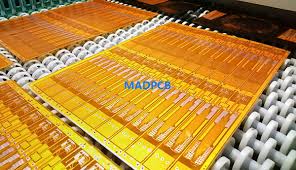
What is the process of assembling a flexible printed circuit manufacturers?
The next step is circuit fabrication, where the flexible substrate is prepared and the circuit pattern is created. This process begins with cleaning and treating the substrate surface to ensure proper adhesion of the conductive materials. The circuit pattern is then transferred onto the substrate using techniques such as photolithography or screen printing. In photolithography, a light-sensitive photoresist is applied to the substrate, exposed to a patterned light source, and developed to reveal the circuit traces. The exposed areas are etched away, leaving the desired circuit pattern on the substrate.
After the circuit pattern is formed, the assembly process moves to component placement. Surface Mount Technology (SMT) is commonly used for placing components onto the flexible substrate. Automated pick-and-place machines accurately position surface-mounted devices (SMDs) and other components onto the designated pads. The flexibility of the FPC requires that these machines handle the substrate with care to avoid bending or damaging it during placement.
Once the components are placed, the next step is soldering, which secures the components to the circuit. Reflow soldering is typically used in SMT assembly. The FPC assembly is passed through a reflow oven where the solder paste, applied during the component placement phase, is heated to its melting point. This process forms solid and reliable solder joints between the components and the circuit traces. Due to the heat-sensitive nature of the flexible substrate, precise temperature control is crucial during reflow soldering to prevent damage.
Following soldering, the assembled FPC undergoes a series of inspections to ensure quality and reliability. Automated Optical Inspection (AOI) systems are used to check for soldering defects, component misalignments, and other potential issues. X-ray inspection may also be employed to detect hidden defects such as voids or insufficient solder beneath components. These inspection techniques are essential for identifying and correcting issues before the FPCs are deployed in their final applications.
Final steps may include testing the electrical performance of the FPCs to ensure they meet specified parameters. Functional testing involves applying electrical signals to the FPC and verifying that it operates correctly under simulated conditions. Any necessary adjustments or repairs are made at this stage to ensure that the FPCs are fully functional and reliable.
In conclusion, the process of assembling flexible printed circuits is a complex and precise operation that involves design, material selection, circuit fabrication, component placement, soldering, and thorough inspection. Each step is meticulously carried out to ensure the production of high-quality FPCs that meet the stringent requirements of various applications. The combination of advanced technology and skilled craftsmanship ensures that FPCs deliver optimal performance and reliability in their intended uses.