
Handle Test Orchestration in AI Applications
Handling test orchestration in AI applications is a complex but essential process that ensures models function correctly, efficiently, and fairly across different scenarios. AI systems rely on vast amounts of data, sophisticated algorithms, and dynamic environments, making traditional testing methods insufficient. Test orchestration involves coordinating multiple testing processes, automating workflows, and integrating validation mechanisms to ensure AI models are reliable and ready for deployment. Without proper orchestration, AI applications risk errors, biases, and inconsistencies that can lead to poor performance and unintended consequences.
One of the key aspects of test orchestration in AI applications is automating test execution. AI models must undergo various testing stages, including data validation, model evaluation, performance benchmarking, and security checks. Manually running these tests is time-consuming and prone to human error. By automating these processes, test orchestration ensures that every change to the model is thoroughly evaluated without requiring constant manual intervention. Automated test scripts, continuous integration pipelines, and machine learning operations (MLOps) frameworks help streamline testing, making it faster and more reliable.
Data validation is a crucial part of test orchestration in End-to-end testing platform for Al applications. Since AI models depend on training and testing data, ensuring data consistency and quality is essential. Orchestration tools manage data preprocessing, detect anomalies, and verify that datasets used for model evaluation remain representative of real-world conditions. AI models can experience data drift, where the input data distribution changes over time, leading to degraded performance. By integrating automated data validation into test orchestration, teams can detect drift early and retrain models before they become ineffective.
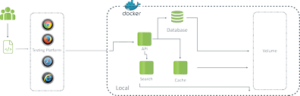
How Do You Handle Test Orchestration in AI Applications?
Ensuring consistent and repeatable model evaluation is another important function of test orchestration. AI models must be tested against different benchmarks to measure accuracy, precision, recall, and fairness. Test orchestration tools coordinate multiple evaluation runs using various datasets, algorithms, and configurations. This helps compare different model versions and ensures that new updates do not negatively impact performance. A/B testing can be incorporated into orchestration workflows to validate model improvements before deploying them to production.
Scalability and resource management play a significant role in AI test orchestration. AI models often require extensive computational power for training and inference. Orchestration tools optimize resource allocation by scheduling tests based on priority and available infrastructure. Cloud-based AI testing platforms provide the flexibility to scale resources dynamically, ensuring that models can be tested under various conditions without overloading the system. By managing test execution efficiently, orchestration minimizes downtime and accelerates AI development cycles.
Security and compliance testing are integral to AI test orchestration, ensuring that models are not vulnerable to attacks or regulatory violations. AI applications can be targeted by adversarial attacks designed to manipulate predictions. Orchestration frameworks integrate security testing by simulating attack scenarios and detecting vulnerabilities. Additionally, AI models must comply with industry regulations such as GDPR, HIPAA, and fairness guidelines. Test orchestration includes automated compliance checks to verify that AI models meet ethical and legal standards before deployment.
Monitoring and feedback loops complete the test orchestration process by continuously evaluating AI models in real-world conditions. Even after deployment, AI applications require ongoing validation to ensure they perform as expected. Orchestration tools facilitate logging, real-time monitoring, and automated alerts to detect performance degradation. If a model starts producing biased or inaccurate results, orchestration systems trigger retraining workflows to maintain optimal performance. This ensures that AI applications remain effective and trustworthy over time.
Handling test orchestration in AI applications requires a structured and automated approach to data validation, model evaluation, scalability, security, and continuous monitoring. By integrating orchestration tools with MLOps and CI/CD pipelines, organizations can streamline AI testing, improve reliability, and accelerate deployment. Effective test orchestration not only enhances AI model performance but also ensures fairness, security, and compliance, making AI-driven systems more robust and trustworthy.